Lithography defined in software
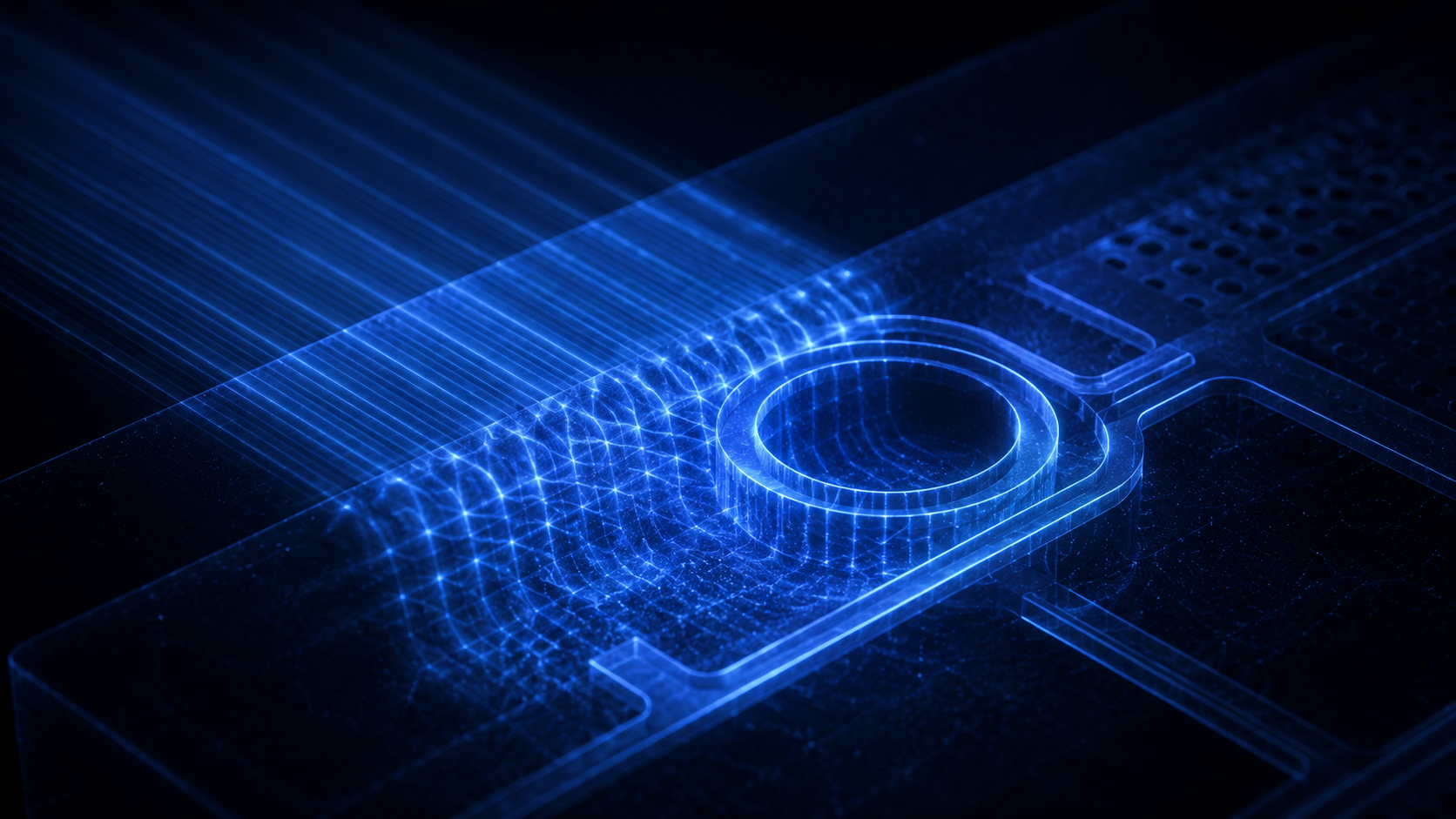
HoloLith replaces physical masks with programmable light. Using HoloTile light engines, it synthesizes arbitrary optical fields directly, enabling lithography where patterns are generated in software instead of hardware.
The computational lithography engine
The pattern lives in software, not in glass
Conventional lithography projects a physical mask onto the photoresist, placing a fixed optical element at the center of the manufacturing process. Every design revision requires a new mask, adding cost, lead time, and reducing process flexibility.
HoloLith replaces the mask with computation. HoloTile light engines synthesize the required optical field directly in the photoresist by controlling the phase, amplitude, and timing of propagated laser beams. The exposure is computed in software, enabling rapid design iterations and adaptive patterning.
Multi-angle coherent exposure
Interference does the writing
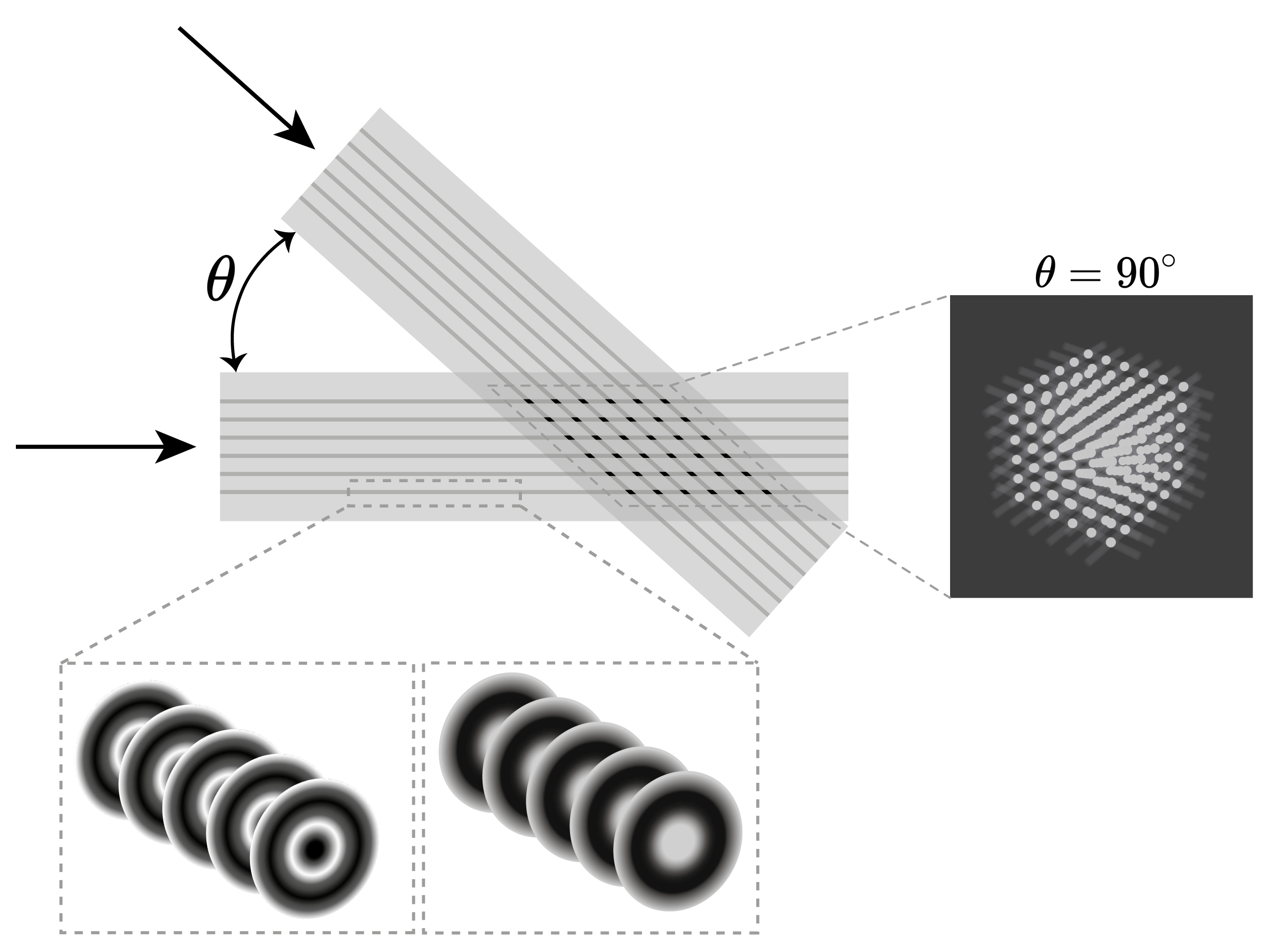
Multiple coherent light engines can illuminate the photoresist from different directions. Where the fields overlap, they reinforce one another, concentrating the exposure only where it is intended.
One engine
A single HoloTile light engine enables programmable, maskless lithography, creating complex patterns, high-aspect-ratio features, and 2.5D structures directly in the photoresist.
Two engines
Two coherent light engines can concentrate the exposure at their intersection, improving control in depth as well as across the surface.
Many engines
Additional illumination angles introduce new degrees of freedom for shaping the optical field, enabling finer features, higher dose contrast, and ultimately true volumetric control.
Engineered point spread functions
Focus that holds over an extended depth
Conventional focused beams spread out quickly away from the focal plane, forcing a trade-off between resolution and depth of focus. HoloTile light engines generate engineered point spread functions, with beam profiles designed in software to maintain their shape over an extended distance. Because the beams are software-defined, they can be tailored to the feature, the material, and the exposure geometry.
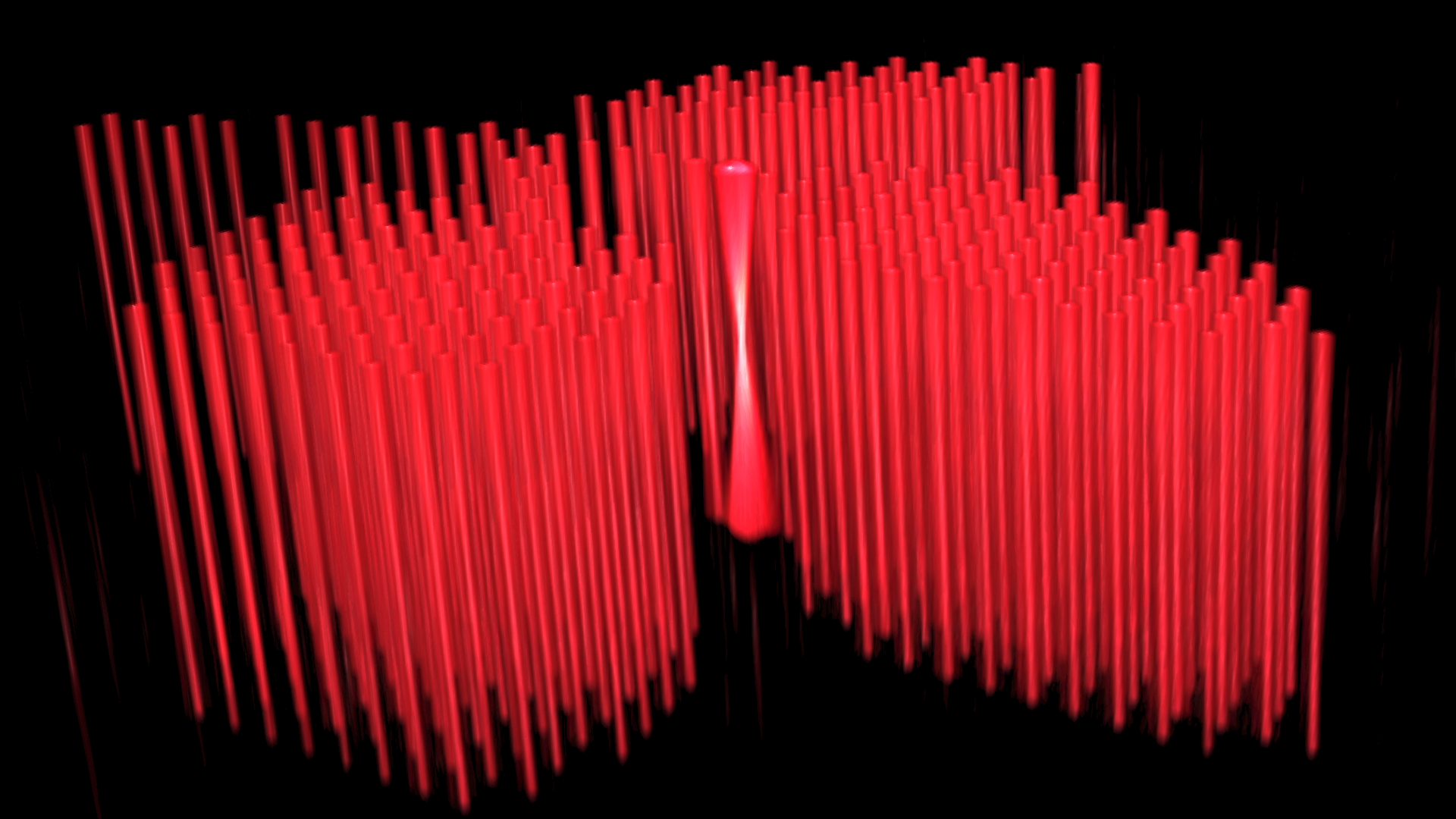
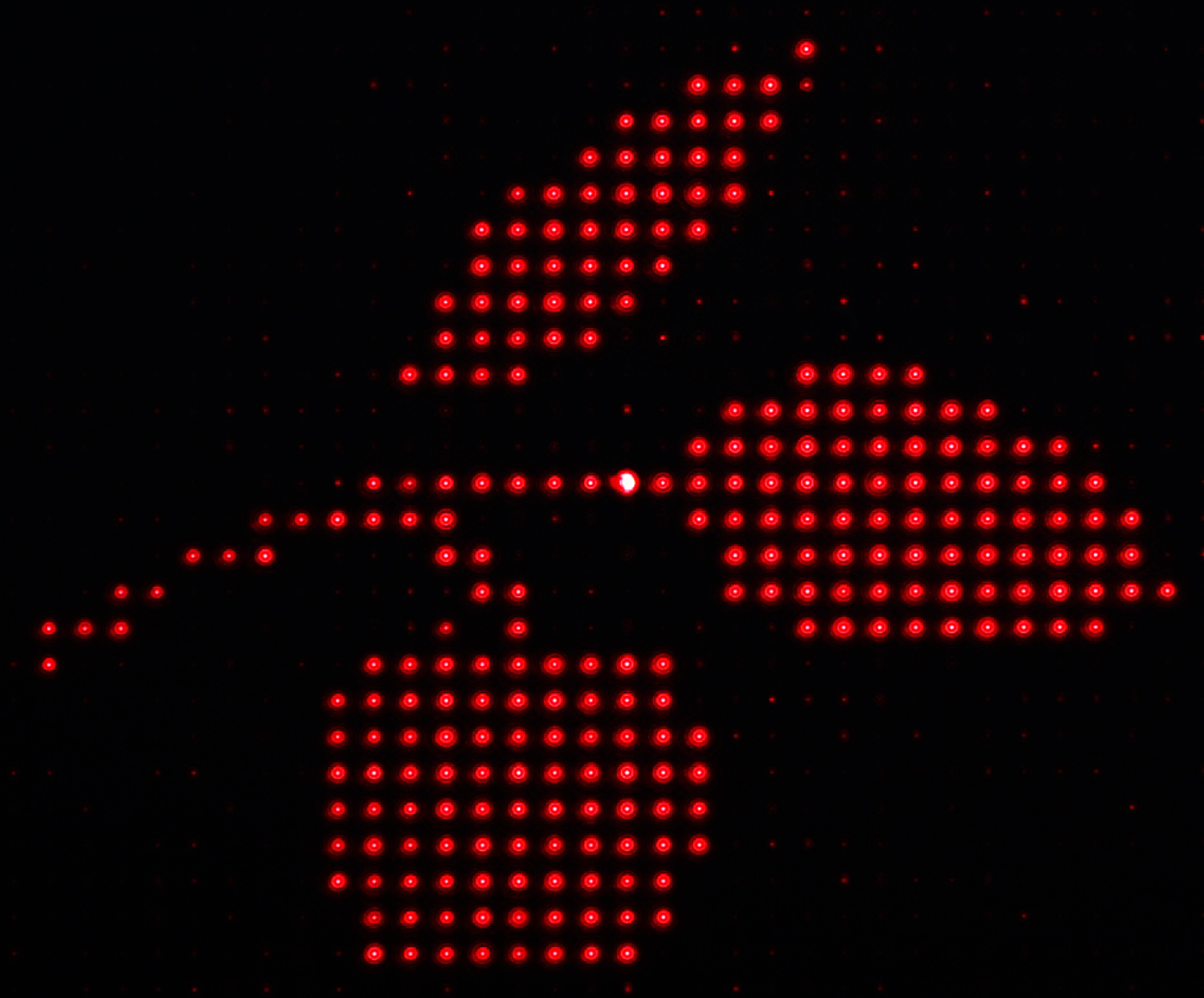
An experimentally captured z-stack of a Bessel beam array synthesized by a HoloTile light engine. Each beam maintains its cross-section over the full depth of the stack. The zero order is left in at the center, where its divergence shows how an ordinary focusing beam behaves over the same distance.
Designed for photonics
Flexibility where it matters most
HoloLith is designed for applications where rapid iteration, design freedom, and flexible manufacturing matter more than the economics of high-volume mask production.
Photonic integrated circuits
Waveguides, couplers, resonators, and other photonic components can be fabricated directly from the latest layout. Design revisions become software updates instead of new mask sets.
Three-dimensional microstructures
Engineered point spread functions enable high-aspect-ratio features and complex 2.5D geometries. As the platform evolves, multi-angle coherent exposure extends these capabilities toward true volumetric fabrication.
Rapid design iteration
Every exposure can be different. Design exploration, parameter sweeps, and process optimization become part of the normal workflow, with no masks to redesign or manufacture between iterations.
Low-volume production
Many photonic and micro-optical devices are produced in quantities where mask costs dominate. Software-defined lithography removes that upfront investment, making small production runs economically viable.
Featured in
Coverage and mentions
News, papers, and coverage connected to the HoloTile light engine platform that underpins HoloLith.
Working on photonic fabrication?
HoloLith is in active development. We'd like to hear about the structures you need to make.