
Toward programmable
holographic atom arrays
QuanTile applies holographic trap generation to the optical scaling problem at the center of neutral atom quantum systems.
Our goal
One programmable system in place of a rack of optics
Neutral-atom quantum processors depend on laser fields that are precise, programmable, and reconfigurable, tweezer arrays to trap atoms, lattice light to hold them, imaging and gate beams to read and drive them. Building that control has meant assembling custom optics for each processor: lenses, mirrors, acousto-optic deflectors, spatial light modulators, wired together and aligned by hand. Most groups start from scratch.
QuanTile proposes a different starting point. HoloTile, our holographic light-shaping platform, generates optical fields computationally rather than through fixed hardware. One system produces the trap geometry, the imaging light, and the gate beams, and reconfigures all of them by changing what the light engine computes.
Design targets
What we are building toward
These are the capabilities we believe holographic light shaping can bring to neutral-atom quantum computing.
Scalable trap arrays
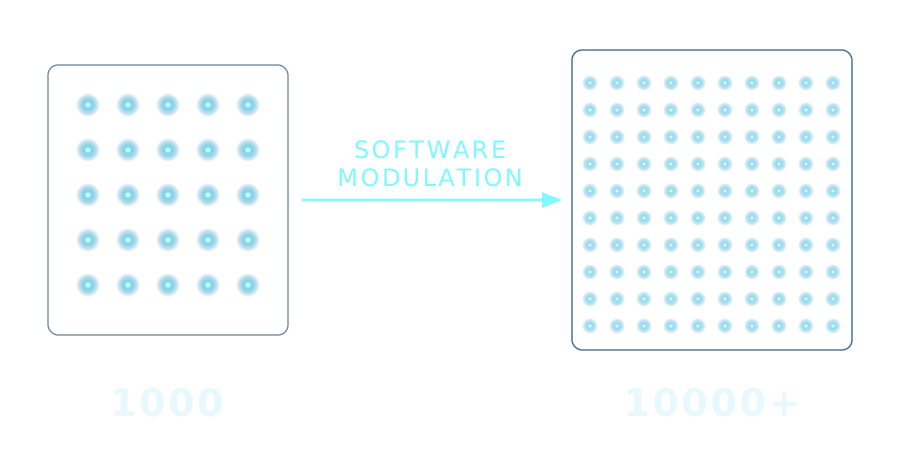
Array size becomes a computational parameter rather than a hard optical constraint. QuanTile generates large, homogeneous arrays, and the target for neutral atoms is 10,000+ sites.
Arbitrary lattice geometry
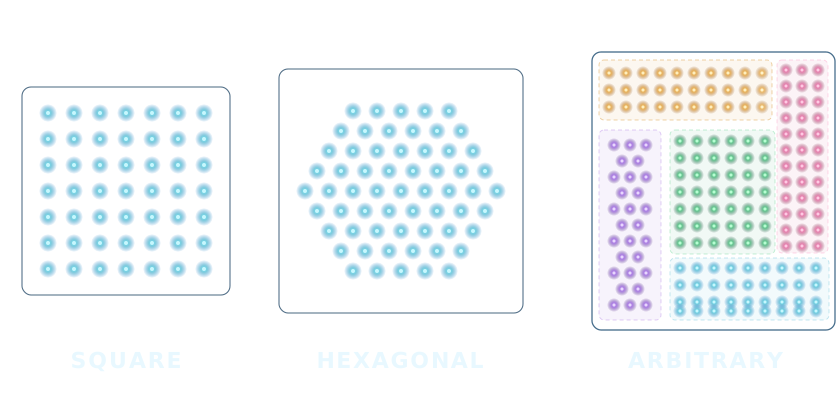
Square, hexagonal, checkerboard, and irregular geometries generated from the same optical system. Spacing is tunable in real time, with lattice geometry reconfigured computationally.
Full-array parallel operation
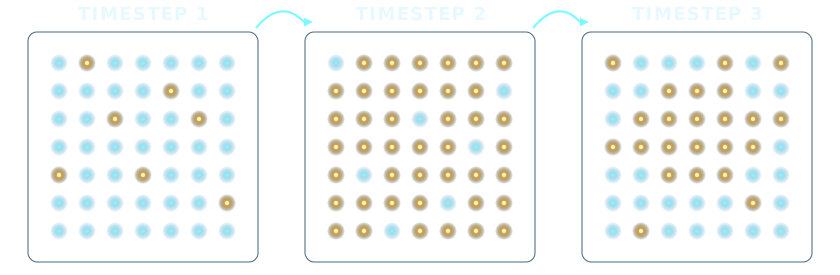
The target is full-register loading and operation in parallel. Performance is measured in parallel operations per second, with timing set by the physical task rather than sequential site addressing.
Per-site trap shaping
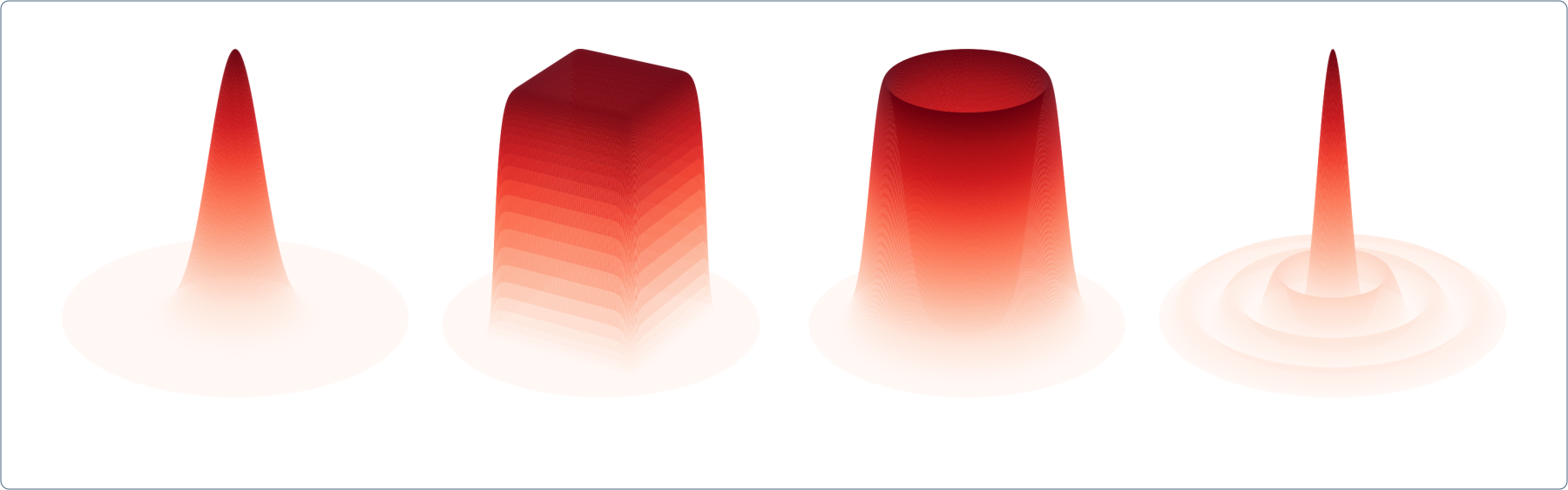
Each trap site has its own intensity profile, controlled independently of the array geometry. That control supports coherence time, trap uniformity, and Rydberg-state stability.
Multi-species trapping
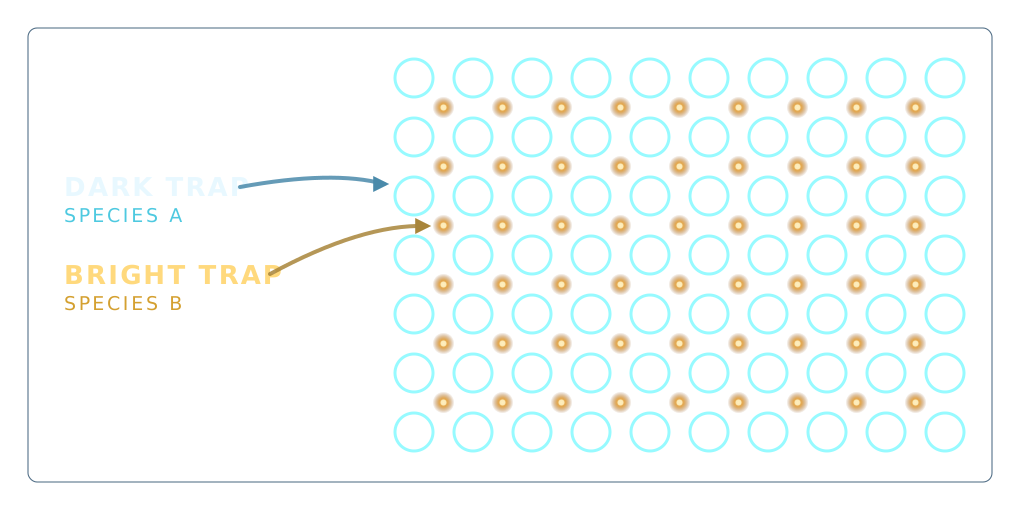
Dark and bright traps are interleaved within one lattice, hosting two atomic species from the same optical architecture.
Multi-wavelength from one system
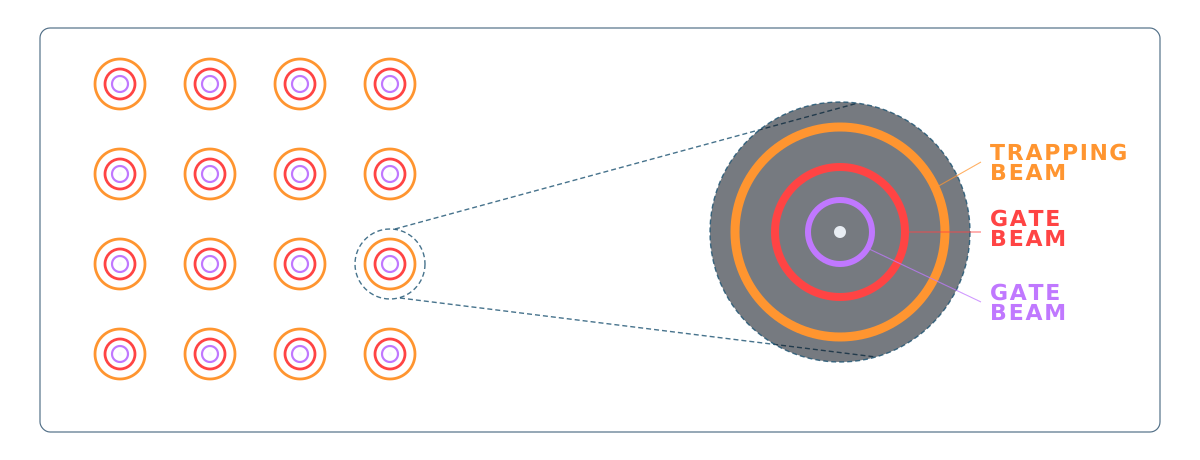
Trapping, imaging, and gate light at different wavelengths are projected and co-aligned from a single holographic system. QuanTile treats alignment as a structural requirement.
Featured in
Coverage and mentions
News, announcements, papers, preprints, and conferences connected to this platform.
Building neutral-atom processors?
We are working with groups in the field to define the required specifications for an external optical control layer, including trap depth, array size, wavelength sets, refresh rates, uniformity, and alignment tolerances. If you are building a neutral atom platform, we would like to understand what your system needs.